New Year’s Eve is the one time of year when the clock ticking down to midnight isn’t just about fireworks or resolutions; it’s about what’s on the table. Whether you’re nibbling on grapes in Spain or slurping noodles in Japan, every bite you take might just hold a little magic for the year ahead.
Why do so many cultures turn to food to ring in the New Year? Because what we eat on this special night symbolizes everything we wish for: prosperity, health, happiness, and connection. From hearty lentils in Hungary to sweet tamales in Mexico, New Year’s Eve food traditions offer a delicious peek into the hopes and dreams of people around the globe.
So, grab a fork—or maybe chopsticks—and join me on a culinary journey to explore how the world eats its way into a brand-new year. Spoiler alert: you might just find your next New Year’s Eve meal along the way!
The Purpose of New Year’s Eve Dishes
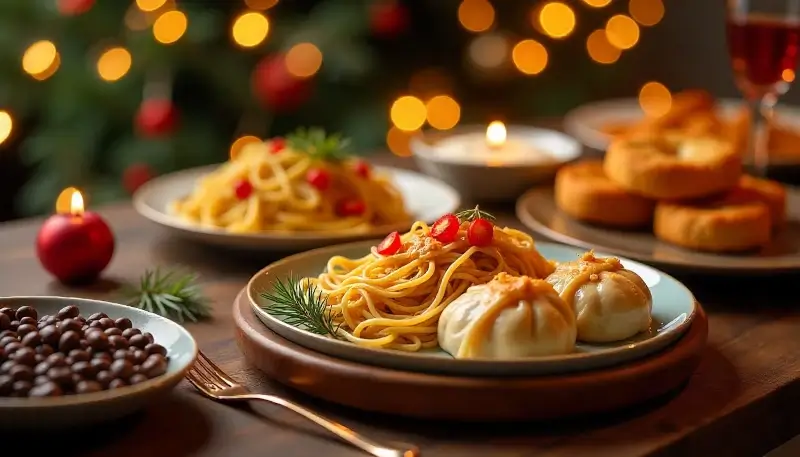
New Year’s Eve meals aren’t just about satisfying hunger—they’re about feeding hopes and dreams for the year ahead. Around the globe, people prepare and enjoy specific dishes that symbolize their aspirations. Each bite is steeped in tradition, and every ingredient carries a deeper meaning.
What These Dishes Represent
- Wealth: Many cultures focus on foods that resemble coins or are golden in color. Lentils in Italy and Hungary or black-eyed peas in the Southern United States are thought to bring financial fortune.
- Longevity: Foods that symbolize long life often emphasize their shape or length. Japan’s soba noodles and China’s long dumplings are popular examples.
- Happiness: Sweets steal the show here! Desserts like marzipan pigs in Germany and honey-drenched pastries in Morocco symbolize a year full of joy and sweetness.
- Unity and Family: Some dishes are meant to be shared, symbolizing togetherness. In Mexico, tamales are a family affair, while Lebanon’s mezze platters encourage communal eating.
- New Beginnings: Foods associated with renewal often feature fresh, simple ingredients. Iran’s herbed rice or dishes with spring rolls in China remind us of growth and starting afresh.
Food brings everyone to the table, not just for nourishment but for connection. Whether you’re slurping noodles, biting into a sweet treat, or sharing a communal dish, these meals remind us of what truly matters: starting the year with hope and gratitude, surrounded by good food and loved ones.
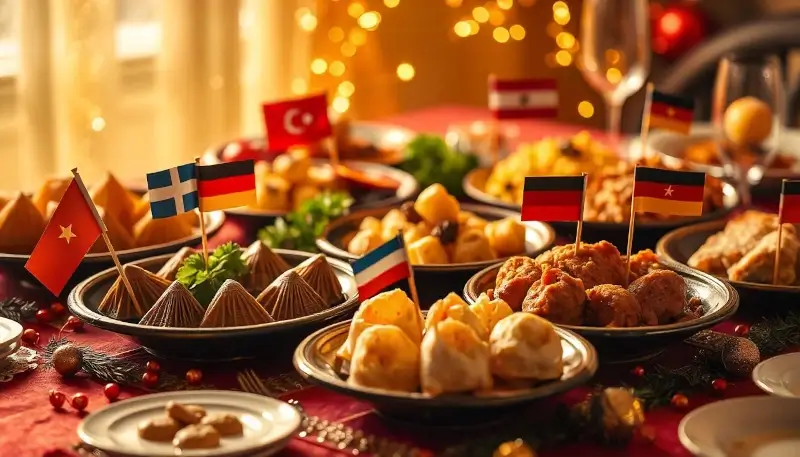
Some Traditions Around the World
Europe
- Spain: Grapes for luck (12 at midnight).
- Italy: Cotechino and lentils for prosperity.
- Hungary: Lentils for wealth.
- Germany: Marzipan pigs for fortune.
- Greece: Vasilopita cake with a hidden coin.
- Scotland: Shortbread for sweetness (Hogmanay traditions).
Middle East and North Africa
- Morocco: Couscous and dates for blessings and abundance.
- Iran: Sabzi Polo Mahi (herbed rice and fish) for renewal.
- Lebanon: Kibbeh and mezze for prosperity.
- Egypt: Mulukhiyah for nourishment and celebration.
Asia
- China: Dumplings and spring rolls for wealth.
- Japan: Soba noodles for longevity.
- Philippines: Round fruits for success.
- India: Laddoos and payasam for a prosperous year.
The Americas
- Southern US: Black-eyed peas and collard greens for luck.
- Mexico: Tamales for unity and tradition.
- Brazil: Lentils and pork for abundance.
- Colombia: Ajiaco (chicken and potato soup) for warmth and good fortune.
- Peru: Panettone (a legacy of Italian influence) for celebration.
- Argentina: Sweet cider for a joyful toast.
Africa
- Nigeria: Jollof rice for communal joy.
- South Africa: Braai (barbecue) for togetherness and celebration.
- Ethiopia: Injera and wot for a hearty start to the year.
How Food Brings Us Together on New Year’s Eve

Food has an incredible way of bringing people together, and on New Year’s Eve, it becomes more than just a meal—it’s a celebration of shared hopes and dreams. Whether it’s the act of cooking as a family, sharing a plate of symbolic dishes, or raising a glass to toast the new year, food traditions remind us of the universal joy of gathering around the table.
As the clock strikes midnight, these shared moments make us realize that no matter where we are or what we eat, the heart of New Year’s Eve is the same: hope for a brighter future, gratitude for the past, and the joy of coming together. So, as you plan your New Year’s Eve dinner, why not borrow a tradition or two? You might just find a new favorite dish to carry into the next year.