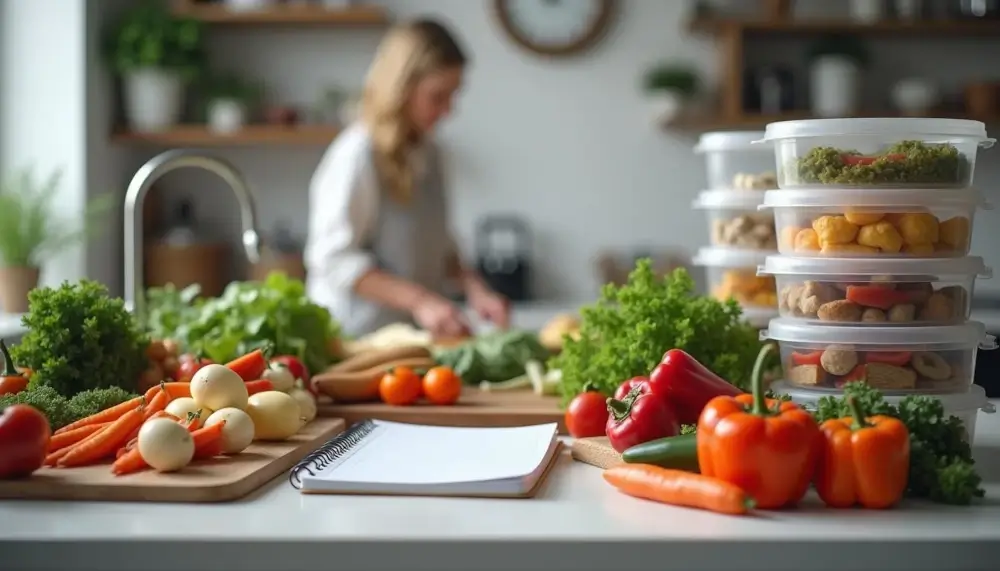
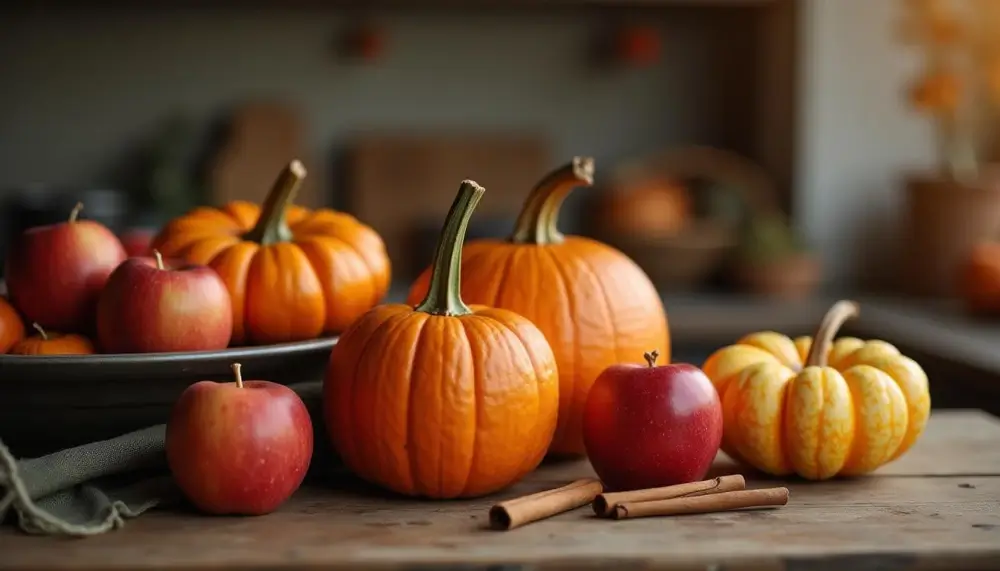
Fall is the season when nature’s bounty is at its best. The air gets cooler, the leaves change, and suddenly your cravings shift towards warm, comforting meals. Imagine strolling through a farmer’s market, surrounded by vibrant pumpkins, crisp apples, and earthy mushrooms. It’s like the ingredients themselves are whispering, “It’s time to get cozy in the kitchen.” These fall ingredients are not only delicious, but they also bring a sense of nostalgia and warmth to your meals. But beyond their seasonal charm, they play an important role in seasonal cooking, adding freshness and flavor to every dish.
In this article, we’ll take you through the importance of fall ingredients, the best ones to use, and how you can incorporate them into your cooking to bring out the true taste of the season.
The Role of Fall Ingredients in Bringing Out Seasonal Flavors

Why Are Fall Ingredients Important?
Fall ingredients are more than just a seasonal trend. They are an essential part of cooking that reflects nature’s cycle. As temperatures drop, we instinctively crave heartier, warmer foods to keep us grounded. Fall ingredients such as squash, sweet potatoes, and apples offer a balance of sweetness, earthiness, and warmth that’s perfect for this time of year.
Moreover, using seasonal ingredients is better for the environment and your health. Seasonal produce is picked at its peak, which means it’s fresher and more nutrient-dense. A 2012 study from the International Journal of Food Science found that nutrient levels are often higher in freshly picked seasonal produce than in off-season produce that has been stored for long periods.
Variety of Fall Ingredients: Vegetables, Fruits, and Spices
When you think of fall ingredients, you probably imagine pumpkins and apples, but the variety available during this season is staggering. Think root vegetables, hearty greens, and aromatic spices. Fall vegetables like butternut squash, Brussels sprouts, and carrots add depth and richness to soups, stews, and roasted dishes. Then there are fruits like pears, cranberries, and figs that bring natural sweetness to both savory and sweet dishes.
Fall is also the season of spices. Think cinnamon, nutmeg, and cloves. These warming spices are key to adding flavor to everything from desserts to savory dishes like pumpkin soup or spiced apple cider. Spices don’t just taste good; they’ve been shown to have health benefits too. Cinnamon, for instance, can help reduce blood sugar levels, according to a study published in Diabetes Care.
How to Use Them in Seasonal Dishes
Now that you know what’s in season, it’s time to put those ingredients to work. Roasting is a go-to cooking method in the fall because it brings out the natural sweetness of vegetables like carrots and squash. Use spices like cinnamon and nutmeg in your baked goods or sprinkle them over roasted nuts for a fall-inspired snack.
You can also incorporate fall fruits into savory dishes. For example, pears and cranberries add brightness to salads or can be cooked down into sauces that pair well with meats like pork or turkey. Don’t forget about soups—fall is the perfect time to simmer root vegetables, mushrooms, and hearty greens into warming bowls of comfort.
Best Fall Ingredients List: Flavors for October and November
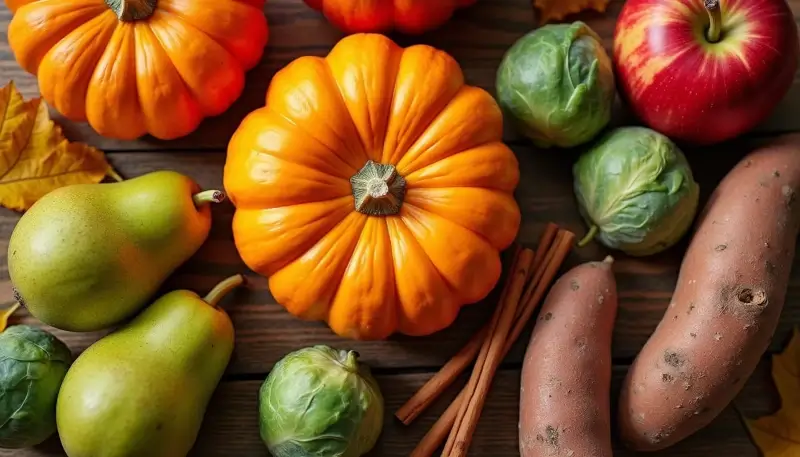
Seasonal Vegetables and Fruits
There’s no shortage of amazing vegetables and fruits during fall. Some of the most popular options include:
- Butternut Squash: This versatile vegetable can be roasted, pureed into soups, or used in casseroles.
- Pumpkin: Pumpkin isn’t just for pies! Use it in soups, stews, or even as a filling for pasta.
- Apples: Perfect for baking, but also delicious in salads or as part of a savory dish like pork chops.
- Pears: Juicy and sweet, pears work in both desserts and savory meals.
- Cranberries: A Thanksgiving favorite, cranberries bring tartness to sauces, salads, and baked goods.
Fall Spices and Flavorings: Adding a Unique Touch to Your Meals
What would fall be without its signature spices? The warming flavors of cinnamon, nutmeg, cloves, and allspice define the season. These spices not only enhance the taste of desserts like pies and cakes but can also be used in savory dishes. Try adding a pinch of cinnamon to a butternut squash soup or a dash of nutmeg to your mashed potatoes. They will elevate the flavor without overpowering the dish.
Special Ingredients for Drinks: Fall Cocktails and Spice Syrups
Fall ingredients aren’t just for food—they can spice up your drinks too. You can make an amazing autumn cocktail by infusing spirits with cinnamon, apples, or even pumpkin puree. Spice syrup, which combines sugar with spices like cinnamon, cloves, and allspice, can be added to cocktails, coffee, or tea to give it a seasonal flair.
Ways to Use Fall Ingredients in the Kitchen

Quick and Easy Fall Recipes
Need some quick ideas for incorporating fall ingredients into your meals? Try a simple roasted vegetable medley with butternut squash, carrots, and Brussels sprouts. Or whip up a cozy apple crisp with cinnamon and oats for dessert. These are dishes that can be prepared in under 30 minutes but taste like you’ve spent hours in the kitchen.
Using Fall Ingredients for Garnishing and Plating
Fall ingredients also lend themselves to beautiful presentations. Think about using pomegranate seeds or cranberries to garnish a salad or adding a sprig of rosemary to a fall-inspired roast. A drizzle of maple syrup or a dusting of cinnamon can be the finishing touch that makes a dish look as good as it tastes.
How to Make Homemade Fall Spice Syrup
Making fall spice syrup at home is easier than you might think. Combine 1 cup of sugar, 1 cup of water, a cinnamon stick, and a few cloves in a pot. Simmer until the sugar dissolves and let it steep for about 20 minutes. Strain out the spices, and you’ll have a delicious syrup to use in your fall cocktails, lattes, or over pancakes.
Frequently Asked Questions About Fall Ingredients
Why Is It Important to Use Seasonal Ingredients?
Using seasonal ingredients ensures you’re getting the freshest produce, which often means more nutrients and better flavor. Plus, it’s better for the environment, as the food doesn’t have to travel as far to get to your plate.
What Are the Most Popular Fall Ingredients?
The most popular fall ingredients include pumpkins, apples, pears, cranberries, sweet potatoes, and spices like cinnamon and nutmeg. These ingredients are versatile and can be used in both sweet and savory dishes.
How to Store Fall Ingredients to Keep Them Fresh?
To keep your fall ingredients fresh, store root vegetables like carrots and squash in a cool, dark place. Fruits like apples and pears should be kept in the refrigerator, while spices should be stored in airtight containers away from direct sunlight.
Conclusion
Fall ingredients are a treasure trove of flavors waiting to be explored. From hearty vegetables to sweet fruits and aromatic spices, there’s so much you can do with what’s in season during this time of year. Whether you’re roasting squash, baking apple pies, or mixing up a spiced cocktail, these ingredients bring warmth and comfort to your table. So why not embrace the season and try something new in your kitchen? What’s the first fall ingredient you’re excited to cook with this year?
Sources:
Cleveland Clinic: Why Eating Seasonally Is Healthier for You — And Your Wallet